Within Sardinia UFOs
Could Rocket Tests Explain Sardinia's Strange Lights?
Rocket launches and aerospace tests at Salto di Quirra offer a documented source of lights, trails and clouds that witnesses may find unfamiliar.
On this page
- The history of launches at Salto di Quirra
- How exhaust clouds and trajectories can appear
- What is needed to match a sighting to a test
Page outline Jump by section
Introduction
Rocket activity at Salto di Quirra can plausibly explain some of Sardinia’s reports of strange lights, luminous trails and oddly shaped clouds, but it is not a universal answer to every unidentified sighting on the island. The range has supported sounding-rocket launches, atmospheric experiments, missile trials and rocket-motor tests since the early space age. Some of those activities deliberately produced visible chemical clouds high above Sardinia; others generated bright exhaust, rapidly changing trails or intense ground-level flares that could look unfamiliar when seen from a distance.[esa.int]esa.intEuropean Space Agency ESAThese were boosted British Skylark sounding rockets carrying a canister that released barium and ammonium clouds into the ionosphere…
The important distinction is between a credible mechanism and a demonstrated identification. Salto di Quirra gives investigators a documented local source of unusual aerial displays, especially in eastern and southern Sardinia. Yet a sighting can be attributed to the range only when its date, time, direction, duration and appearance agree with a recorded launch or test. In many older UFO accounts, those details are missing, so the rocket explanation remains possible rather than proven.
The launches that made unfamiliar lights
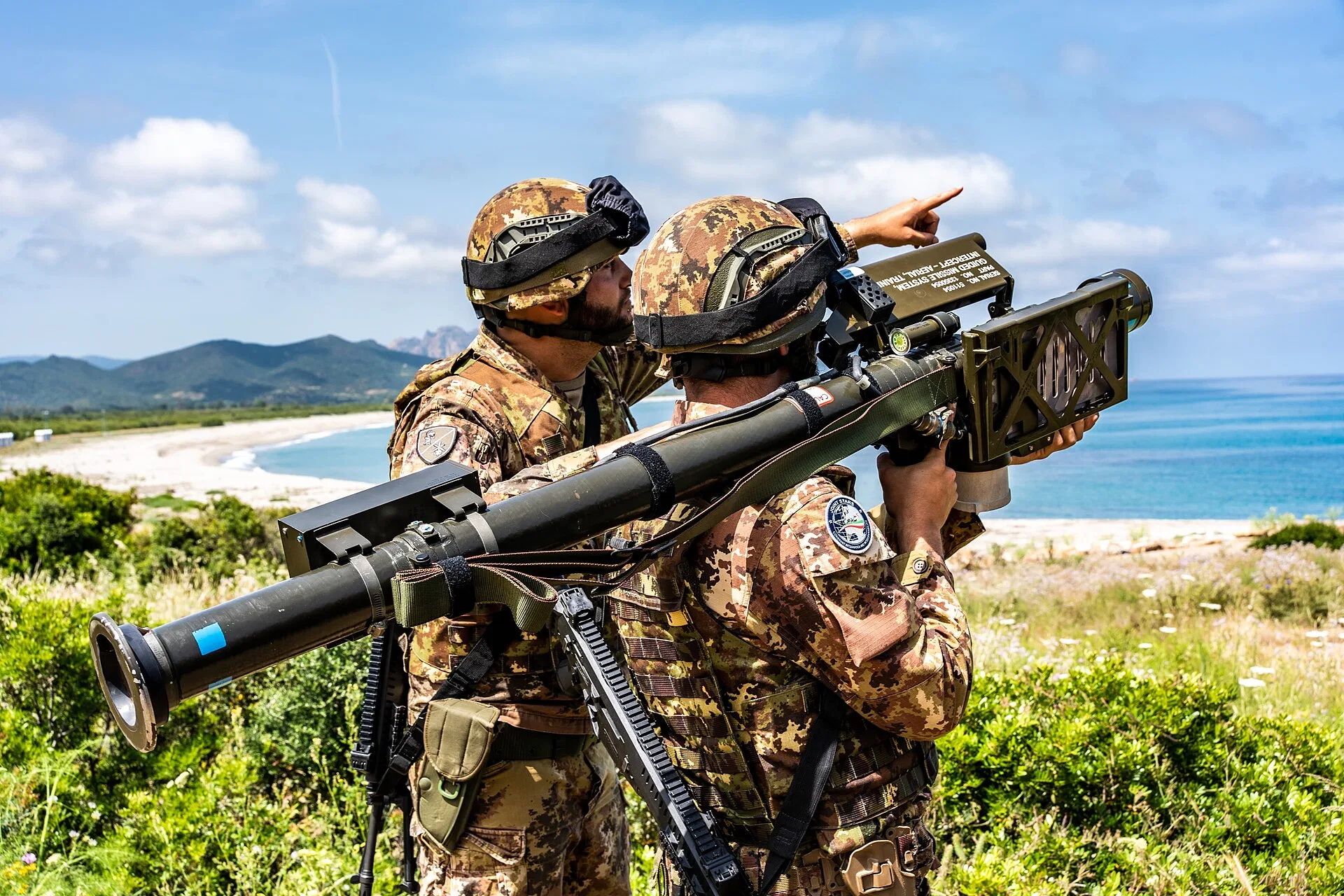
The Salto di Quirra range was established in 1956 and includes an inland test area around Perdasdefogu and facilities towards the coast at Capo San Lorenzo. Although primarily a military testing complex, it became an important launch site during the formative years of Italian and European space research.[Aeronautica Militare]aeronautica.difesa.itAeronautica Militare Alti ComandiAeronautica Militare Alti Comandi
Italian researchers working with the Italian Air Force and NASA began launching atmospheric research rockets from the site in 1961. Early Nike-Cajun and related missions carried materials such as sodium and lithium to high altitude so that scientists could observe their movement and measure winds in the upper atmosphere. Historical launch catalogues place the first flight on 12 January 1961 and record numerous subsequent launches from the Sardinian site.[Astronautix]astronautix.comSalto di QuirraFirst Launch: 1961-01-12. Last Launch: 1992-03-18. Number: 131. Location: San Lorenzo, Perdas de Fogu, Sardini…
Salto di Quirra then hosted the first launches conducted by the European Space Research Organisation, the predecessor of the European Space Agency. On 6 and 8 July 1964, boosted Skylark sounding rockets carried canisters that released barium and ammonium clouds into the ionosphere. ESA’s archives describe further Skylark activity from Sardinia during the organisation’s early sounding-rocket programme, alongside French Centaure and Bélier vehicles and other experimental rockets.[esa.int]esa.intEuropean Space Agency ESAThese were boosted British Skylark sounding rockets carrying a canister that released barium and ammonium clouds into the ionosphere…
These were not incidental wisps of exhaust. The visible clouds were part of the experiment. Researchers photographed and tracked them to study upper-atmospheric movement and electrical conditions. A witness who did not know that a launch had taken place might reasonably have described such a display as a glowing mass, a coloured cloud, a light that expanded without obvious cause or a luminous object that changed shape while apparently remaining high in the sky.
The busiest scientific-launch period ended in the early 1970s, but rocket work at Quirra did not disappear. Experimental Alfa vehicles were launched in the 1970s, a Scout-related test took place in 1992, and the range later supported propulsion work connected with Europe’s Vega launcher family. More recently, the Italian Air Force reported the launch of a hybrid-propulsion sounding rocket for technology validation, while Avio conducted major static firings of the Vega-C Zefiro-40 motor there in May and October 2024.[astronautix.com]astronautix.comSalto di QuirraFirst Launch: 1961-01-12. Last Launch: 1992-03-18. Number: 131. Location: San Lorenzo, Perdas de Fogu, Sardini…
Why rocket displays can look extraordinary
A rocket does not always look like the familiar narrow flame shown in daylight launch footage. What an observer sees depends on distance, altitude, viewing angle, weather and whether the upper part of the trajectory is still illuminated by the Sun.
Twilight illumination can make a plume appear detached. After sunset at ground level, a climbing rocket and its exhaust may remain in sunlight at high altitude. Against a darkening sky, the illuminated plume can resemble a bright cone, jellyfish shape, expanding bubble or glowing cloud, while the rocket itself is too small to see. High-altitude clouds are often easiest to observe during twilight precisely because sunlight reaches them from beyond the observer’s horizon.[NASA]nasa.govMission Seeks to Understand Bright Night-Shining Clouds by Creating OneMission Seeks to Understand Bright Night-Shining Clouds by Creating One
The trail may widen, twist or seem to stop. Winds at different altitudes shear an exhaust trail into curves and separate patches. Perspective can also make a rocket travelling partly towards or away from the observer appear slow or nearly stationary. Once thrust ends, the visible glow may fade abruptly even though the vehicle continues along a ballistic path.
Chemical releases can change colour and shape. Sounding-rocket experiments have used substances including barium, lithium and aluminium compounds to create visible tracers. Some glow through chemical processes; others scatter sunlight. NASA describes barium releases that begin greenish and become violet as the material is ionised and stretched by the upper atmosphere and magnetic field. Comparable physics applied to the barium experiments launched from Quirra in the 1960s.[NASA]nasa.govAbout Vapor TracersBelow, we provide information regarding how NASA carries out sounding rocket missions to reveal the upper atmospheric winds and ion drift…
A small release can be visible over a very large area. In a 2017 NASA experiment from Virginia, coloured clouds produced by a sounding rocket generated almost 2,000 public reports and photographs across several US states. The event demonstrates how a planned scientific release can be seen far beyond its launch site and interpreted by observers with no view of the rocket itself.[NASA]nasa.govWallops Rocket Launch Lights up the Mid-Atlantic CoastWallops Rocket Launch Lights up the Mid-Atlantic Coast
This matters in Sardinia because the island’s clear horizons and relatively dark rural skies can improve visibility. A phenomenon originating over the Quirra range or its offshore safety area need not be reported only from Perdasdefogu. Depending on altitude and atmospheric conditions, witnesses elsewhere in eastern or southern Sardinia might see the upper trail while remaining unaware of the activity below.
Launches and static tests are not the same
The phrase “rocket test” covers several visually different events. An actual sounding-rocket or missile launch produces a moving source that climbs through the atmosphere and may leave a long trail. Its apparent direction should broadly correspond to the range and the authorised flight corridor.
A static motor firing is different. The motor is secured to a test stand rather than launched. Avio’s Zefiro firings at Salto di Quirra were ground tests of full-scale solid-propellant stages, conducted to assess motor and nozzle performance. Such firings can produce an extremely bright fixed flame, a large smoke cloud, noise and illumination reflected from low cloud, but they cannot directly account for an object reported travelling silently across a large section of sky at high altitude.[Avio]avio.comlast rocket motor firing clears path vega c launchlast rocket motor firing clears path vega c launch
Military exercises add further possibilities, including missiles, target drones, aircraft flares and other systems tested within controlled airspace. The Italian Air Force describes Quirra as a site for advanced multi-domain training as well as experimental and prototype testing. That broad remit makes the range relevant to investigations, but it also creates a danger of overgeneralisation: the mere existence of secretive or restricted activity is not evidence that any particular unexplained light came from it.[Aeronautica Militare]aeronautica.difesa.itesercitazioni conclusa la centurion warrior 2025esercitazioni conclusa la centurion warrior 2025

What is needed to match a sighting
A defensible identification requires more than noting that Salto di Quirra lies somewhere in Sardinia. Investigators need enough information to test whether the observation and the activity could have been the same event.
The most useful checks are:
- Exact date and time. A launch or firing record must overlap the observation, allowing for differences between local time and the time standard used in technical documents.
- Witness location and viewing direction. The reported azimuth should point towards the range, an offshore trajectory or a position consistent with the vehicle’s later flight.
- Elevation and movement. A climbing rocket, drifting chemical cloud and static motor firing produce different patterns. Descriptions such as “rose rapidly”, “expanded in place” or “remained fixed near the horizon” are therefore important.
- Duration and colour. A brief flare, a several-minute exhaust trail and a long-lived chemical cloud should not be treated as interchangeable.
- Weather and solar position. Wind determines how a trail spreads, while twilight geometry determines whether high-altitude exhaust remains sunlit.
- Operational records. Notices to airmen, restricted-airspace warnings, range announcements, military records, company press releases and launch catalogues may confirm that an activity occurred.
- Independent observations. Photographs from different locations can establish direction, altitude and motion through triangulation. A single handheld video usually cannot provide reliable distance or speed.
This standard exposes the main weakness in many retrospective Sardinian UFO claims. Reports are often circulated without the original time, compass direction, complete sequence of images or contemporary range schedule. Once those details are lost, neither an exotic interpretation nor a rocket explanation can be established confidently. Modern scientific proposals for studying unidentified aerial phenomena similarly emphasise synchronised cameras, triangulation, radar-derived range and environmental measurements rather than testimony alone.[arXiv]arxiv.orgOpen source on arxiv.org.
How strong is the explanation?
The rocket hypothesis is strongest for reports involving expanding luminous clouds, coloured vapour, upward-moving lights, curved trails or bright objects seen near twilight in a direction compatible with southeastern Sardinia. It is particularly compelling for observations during the documented atmospheric-release campaigns of the 1960s, when rockets from Quirra intentionally produced barium, ammonium, sodium or lithium displays at high altitude.[esa.int]esa.intEuropean Space Agency ESAThese were boosted British Skylark sounding rockets carrying a canister that released barium and ammonium clouds into the ionosphere…
It is weaker for reports from dates with no known activity, for objects moving in directions incompatible with the range, or for close encounters involving detailed structure. Static propulsion tests can explain intense fixed illumination and smoke near the facility, but not every moving light seen elsewhere on the island. Military activity may also remain incompletely documented in public sources, although missing public information should be treated as an evidence gap, not as confirmation of a hidden launch.
No widely accessible source establishes that a famous Sardinian UFO case has been conclusively solved by matching it to a specific Salto di Quirra launch. The more defensible conclusion is narrower: Quirra is a proven source of aerial phenomena that can look highly unusual, and any historical sighting from the appropriate period and direction should be checked against its operations before being labelled genuinely unexplained.
Sardinia’s most useful control case
Within Sardinia’s UFO history, Salto di Quirra matters less as the setting of one dramatic encounter than as a continuing control case. It shows that apparently extraordinary descriptions can arise from real, technically complex events whose appearance is unfamiliar to the public. The 1964 barium-cloud launches are especially instructive because the strange-looking sky phenomenon was documented in advance and intentionally created for science.[European Space Agency]esa.intEuropean Space Agency ESAThese were boosted British Skylark sounding rockets carrying a canister that released barium and ammonium clouds into the ionosphere…
That does not reduce every Sardinian sighting to rocket activity. Instead, it provides a practical way to separate cases. A report that matches a recorded launch, tracer release or motor firing can be regarded as plausibly or confidently explained. A report that lacks the information needed for comparison remains weakly documented. Only a sighting that survives checks against Quirra activity, aircraft, satellites, astronomical objects and weather should retain serious unresolved status.
The lesson is therefore methodological rather than sensational. Salto di Quirra demonstrates why an unidentified light is not necessarily an unidentified craft—and why precise times, directions and operational records matter more than how strange the phenomenon first appeared.
Amazon book picks
Further Reading
Books and field guides related to Could Rocket Tests Explain Sardinia's Strange Lights?. Use these as the next step if you want deeper reading beyond the article.
Rocket Propulsion Elements
Rating: 4.5/5 from 11 Google Books ratings
Aerospace Engineering/Mechanical Engineering The definitive text on rocket propulsion-now completely revised to reflect rapid advancement...
UFOs: Generals, Pilots, and Government Officials Go on the Re...
NEW YORK TIMES BESTSELLER • Impeccably researched, this riveting journalistic investigation separates fact from fiction, and documents th...
The UFO Handbook: A Guide to Investigating, Evaluating, and R...
An explanation of the usual reasons for confusing IFOs (identified flying objects) with UFOs and a survey of the tools used to investigat...
The Cambridge Guide to the Solar System
The Cambridge Guide to the Solar System provides a comprehensive and up-to-date description of the planets and their moons. Writing at an...
eBay marketplace picks
Marketplace Samples
Live-tested eBay searches with available results related to this page.
Selected fromUFO art print oneBay.co.uk.

Endnotes
1.
Source: esa.int
Title: European Space Agency ESA
Link:https://www.esa.int/About_Us/50_years_of_ESA/ESRO_s_first_sounding_rockets
Source snippet
These were boosted British Skylark sounding rockets carrying a canister that released barium and ammonium clouds into the ionosphere...
2.
Source: nasa.gov
Title: About Vapor Tracers
Link:https://www.nasa.gov/soundingrockets/about-vapor-tracers/
Source snippet
Below, we provide information regarding how NASA carries out sounding rocket missions to reveal the upper atmospheric winds and ion drift...
3.
Source: astronautix.com
Link:https://www.astronautix.com/s/saltodiquirra.html
Source snippet
Salto di QuirraFirst Launch: 1961-01-12. Last Launch: 1992-03-18. Number: 131. Location: San Lorenzo, Perdas de Fogu, Sardini...
4.
Source: polispace.it
Title: the san marco project a journey back to the dawn of italian space exploration
Link:https://polispace.it/the-san-marco-project-a-journey-back-to-the-dawn-of-italian-space-exploration/
Source snippet
A Journey Back to the Dawn of Italian Space Exploration1 Feb 2025 — The launch complex was chosen to be the Salto di Quirra test...
5.
Source: historicalarchives.esa.int
Link:https://historicalarchives.esa.int/esro-sounding-rockets-arctic-circle-greek-islands-european-inheritance
Source snippet
Historical ArchivesESRO sounding rockets from the Arctic Circle to Greek islands: a European inheritance | ESA Archives PortalIt operated...
6.
Source: historicalarchives.esa.int
Link:https://historicalarchives.esa.int/
7.
Source: avio.com
Title: successful engine test boost vega c towards return flight
Link:https://www.avio.com/press-release/successful-engine-test-boost-vega-c-towards-return-flight
8.
Source: avio.com
Title: last rocket motor firing clears path vega c launch
Link:https://www.avio.com/last-rocket-motor-firing-clears-path-vega-c-launch
9.
Source: nasa.gov
Title: Mission Seeks to Understand Bright Night-Shining Clouds by Creating One
Link:https://www.nasa.gov/missions/sounding-rockets/nasa-mission-seeks-to-understand-bright-night-shining-clouds-by-creating-one/
10.
Source: nasa.gov
Title: Wallops Rocket Launch Visible in Eastern United States
Link:https://www.nasa.gov/news-release/nasa-wallops-rocket-launch-visible-in-eastern-united-states/
11.
Source: nasa.gov
Title: Launches Two Rockets Studying Auroras
Link:https://www.nasa.gov/solar-system/nasa-launches-two-rockets-studying-auroras/
12.
Source: scifli.larc.nasa.gov
Link:https://scifli.larc.nasa.gov/kinet-x/
13.
Source: nasa.gov
Title: Wallops Rocket Launch Lights up the Mid-Atlantic Coast
Link:https://www.nasa.gov/missions/sounding-rockets/nasa-wallops-rocket-launch-lights-up-the-mid-atlantic-coast/
14.
Source: science.nasa.gov
Title: Science Colorful Clouds Glow Over Virginia
Link:https://science.nasa.gov/earth/earth-observatory/colorful-clouds-glow-over-virginia-90497/
15.
Source: avio.com
Link:https://www.avio.com/sites/avio.com/files/attachments/202410_03%20-%20Last%20rocket%20motor%20firing%20clears%20path%20for%20Vega-C%20launch.pdf
16.
Source: arxiv.org
Link:https://arxiv.org/abs/2305.18566
17.
Source: esa.int
Link:https://www.esa.int/esapub/sp/sp1235/sp1235v1web.pdf
18.
Source: nasa.gov
Title: Sounding Rockets
Link:https://www.nasa.gov/soundingrockets/
19.
Source: nasa.gov
Title: NAS A’s TOMEX+ Rocket to Track Turbulence at Edge of Space
Link:https://www.nasa.gov/blogs/wallops/2025/08/15/turbulence-at-edge-of-space/
20.
Source: esa.int
Link:https://www.esa.int/Enabling_Support/Space_Transportation/Space_Rider/Closing_the_loop_new_Space_Rider_drop_test
21.
Source: avio.com
Title: ULTIM O TEST DEL MOTORE ZEFIRO 40 APRE LA STRADA A VEGA-C | Avio
Link:https://www.avio.com/index.php/it/ultimo-test-del-motore-zefiro-40-apre-strada-vega-c
22.
Source: esa.int
Title: ES A Television
Link:https://www.esa.int/esatv/Videos/2024/08/Space_Rider_drop_tests
23.
Source: esa.int
Link:https://www.esa.int/ESA_Multimedia/Images/2024/08/Space_Rider_drop_test
24.
Source: avio.com
Title: Firing tests | Avio
Link:https://www.avio.com/taxonomy/term/73
25.
Source: avio.com
Title: Zefiro 40 testato con successo, Vega-C più vicino al volo | Avio
Link:https://www.avio.com/it/comunicati-stampa/zefiro-40-testato-con-successo-vega-c-piu-vicino-al-volo
26.
Source: esa.int
Link:https://www.esa.int/Newsroom/Press_Releases/Vega-C_Zefiro40_Test_Independent_Enquiry_Commission_announces_conclusions
27.
Source: avio.com
Title: ZEFIR O 40 FIRING TEST PRELIMINARY OUTCOME | Avio
Link:https://www.avio.com/press-release/zefiro-40-firing-test-preliminary-outcome
28.
Source: avio.com
Title: Successful firing of the new M10 engine for Vega E | Avio
Link:https://www.avio.com/press-release/successful-firing-new-m10-engine-vega
29.
Source: nasa.gov
Link:https://www.nasa.gov/missions/sounding-rockets/nasa-mission-to-study-earths-atmosphere-by-forming-artificial-night-time-clouds-over-marshall-islands/
30.
Source: nasa.gov
Title: Sounding Rocket Mission Will Trace Auroral Winds
Link:https://www.nasa.gov/solar-system/sounding-rocket-mission-will-trace-auroral-winds/
31.
Source: nasa.gov
Title: NAS A Mission to Study Atmospheric Disturbances from Marshall Islands
Link:https://www.nasa.gov/missions/sounding-rockets/nasa-mission-to-study-atmospheric-disturbances-from-marshall-islands/
32.
Source: esa.int
Link:https://www.esa.int/ESA_Multimedia/Images/2014/07/Sounding_rocket
33.
Source: esa.int
Link:https://www.esa.int/Enabling_Support/Space_Transportation/Anomalous_behaviour_affects_firing_test_of_Vega_s_Zefiro_9_motor
34.
Source: rocket.new
Link:https://www.rocket.new/
35.
Source: nasa.gov
Title: spaceships and rockets
Link:https://www.nasa.gov/humans-in-space/spaceships-and-rockets/
36.
Source: esa.int
Title: HSR 38
Link:https://www.esa.int/esapub/hsr/HSR_38.pdf
37.
Source: esa.int
Title: Thirty Years of Sounding Rockets
Link:https://www.esa.int/esapub/bulletin/bullet88/peder88.htm
38.
Source: esa.int
Link:https://www.esa.int/esapub/bulletin/bullet80/inbrief80.htm
39.
Source: historicalarchives.esa.int
Title: europe space timeline
Link:https://historicalarchives.esa.int/europe-space-timeline
40.
Source: avio.com
Link:https://www.avio.com/node/117?page=7
41.
Source: avio.com
Link:https://www.avio.com/index.php/it/comunicati-stampa?page=9
42.
Source: avio.com
Link:https://www.avio.com/index.php/it/comunicati-stampa?page=8
43.
Source: avio.com
Title: Social River | Avio”Italy among the stars
Link:https://www.avio.com/node/269
44.
Source: avio.com
Link:https://www.avio.com/it/node/269
45.
Source: aeronautica.difesa.it
Link:https://www.aeronautica.difesa.it/en/news/sardegna-pisq-eseguito-con-successo-il-secondo-test-del-motore-zefiro-40-presso-la-space-propulsion-test-facility-di-avio/
Source snippet
nazionali e straniere, oltre ad ospitare l’esecuzione di prove sperimentali, di test e di sviluppo di sistemi prototipici e sperimentali...
46.
Source: aeronautica.difesa.it
Title: Aeronautica Militare Alti Comandi
Link:https://www.aeronautica.difesa.it/home/noi-siamo-l-am/organizzazione/alti-comandi/
47.
Source: aeronautica.difesa.it
Link:https://www.aeronautica.difesa.it/en/news/spazio-lanciato-dal-poligono-del-salto-di-quirra-il-primo-razzo-a-propulsione-ibrida/
48.
Source: aeronautica.difesa.it
Title: esercitazioni conclusa la centurion warrior 2025
Link:https://www.aeronautica.difesa.it/news/esercitazioni-conclusa-la-centurion-warrior-2025/
49.
Source: aeronautica.difesa.it
Title: esercitazioni conclusa al coa la poggio space 2025
Link:https://www.aeronautica.difesa.it/news/esercitazioni-conclusa-al-coa-la-poggio-space-2025/
50.
Source: aeronautica.difesa.it
Title: esercitazioni conclusa al coa la poggio space 2025
Link:https://www.aeronautica.difesa.it/en/news/esercitazioni-conclusa-al-coa-la-poggio-space-2025/
51.
Source: aeronautica.difesa.it
Link:https://www.aeronautica.difesa.it/news/sardegna-soccorso-aereo-aeronautica-militare-e-corpo-nazionale-del-soccorso-alpino-e-speleologico-si-addestrano-insieme/
52.
Source: aeronautica.difesa.it
Link:https://www.aeronautica.difesa.it/news/ricerca-e-sperimentazione-al-pisq-continuano-le-attivita-di-test-dei-propulsori-per-il-trasporto-aerospaziale/
53.
Source: aeronautica.difesa.it
Title: it SARDEGN A: IL PISQ AL CENTRO DEI PROGRAMMI DELL’AERONAUTICA MILITARE
Link:https://www.aeronautica.difesa.it/news/sardegna-il-pisq-al-centro-dei-programmi-dellaeronautica-militare/
54.
Source: aeronautica.difesa.it
Title: comunicato stampa n 10 2020
Link:https://www.aeronautica.difesa.it/en/news/comunicato-stampa-n-10-2020/
55.
Source: aeronautica.difesa.it
Title: it L A NUOVA LINEA DI TIRO CSV MUOVE I PRIMI PASSI
Link:https://www.aeronautica.difesa.it/news/la-nuova-linea-di-tiro-csv-muove-i-primi-passi/
56.
Source: Wikipedia
Title: Salto di Quirra
Link:https://en.wikipedia.org/wiki/Salto_di_Quirra
57.
Source: Wikipedia
Link:https://en.wikipedia.org/wiki/Salto
58.
Source: Wikipedia
Link:https://en.wikipedia.org/wiki/Rocket
59.
Source: youtube.com
Link:https://www.youtube.com/user/saltosystems
60.
Source: find-and-update.company-information.service.gov.uk
Title: company-information.service.gov.uk SALT O SYSTEMS LIMITED overview
Link:https://find-and-update.company-information.service.gov.uk/company/08512943
61.
Source: aeronautica.difesa.it
Title: falcon strike 2025
Link:https://www.aeronautica.difesa.it/en/falcon-strike-2025/
62.
Source: sat-net.com
Title: Salto di Quirra
Link:https://www.sat-net.com/serra/salto_e.htm
63.
Source: play.google.com
Link:https://play.google.com/store/apps/details?hl=en_GB&id=nl.moboa.myclay
64.
Source: GOV.UK
Link:https://www.gov.uk/government/collections/firing-notice
65.
Source: dictionary.cambridge.org
Link:https://dictionary.cambridge.org/dictionary/english/rocket
66.
Source: military-history.fandom.com
Title: Salto di Quirra
Link:https://military-history.fandom.com/wiki/Salto_di_Quirra
Additional References
67.
Source: youtube.com
Title: Space X’s Falcon 9 launch creates confusion over mistaken UFO sighting
Link:https://www.youtube.com/watch?v=nSLgsvg_jIw
Source snippet
Sounding rocket barium cloud UFO NASA Black Brant XII launch could light up sky with colorful display 10 Tampa Bay News...
68.
Source: youtube.com
Title: Nighttime Rocket Launch Creates Colorful Clouds in Space
Link:https://www.youtube.com/watch?v=0YNn1C8AQRE
Source snippet
SpaceX's Falcon 9 launch creates confusion over mistaken UFO sighting...
69.
Source: youtube.com
Title: RAe S Boscombe Down Branch Lecture: The Story of the Skylark
Link:https://www.youtube.com/watch?v=tESNNDBEjAs
Source snippet
Nighttime Rocket Launch Creates Colorful Clouds in Space...
70.
Source: unionesarda.it
Link:https://www.unionesarda.it/en/sardinia/anomalous-lights-in-the-sky-over-gonnosfanadiga-are-they-ufos-mntmhqcb
71.
Source: unionesarda.it
Link:https://www.unionesarda.it/en/sardinia/cagliari-report-of-ufo-hunters-quot-strange-flying-lights-at-the-port-channelquot-gtceyhtz
72.
Source: facebook.com
Link:https://www.facebook.com/TheIndiaTapes/posts/india-issues-notam-for-long-range-missile-launch-window-india-has-issued-a-notic/1273319811644383/
73.
Source: instagram.com
Link:https://www.instagram.com/reel/DQaBQ_qiHCo/?hl=en
74.
Source: avdelphi.com
Link:https://www.avdelphi.com/notam_watch.html?id=12
75.
Source: facebook.com
Link:https://www.facebook.com/UnioneSarda/videos/i-satelliti-starlink-solcano-il-cielo-della-sardegna/2581980221940509/
76.
Source: facebook.com
Link:https://www.facebook.com/gentileluca/videos/-oggetti-non-identificati-nei-cieli-della-sardegna-ne-avete-mai-visti%EF%B8%8F-sono-migl/1284781373854044/